What I learned from a Housing Economics Workshop
This past weekend I attended a workshop on sustainable growth and affordable housing, with a specific focus on the economics of building homes. It was organized by Neighbors Welcome RI, in partnership with Local Return and Strong Towns. It was presented by Ivy Vann, a town planner and urban designer from New Hampshire, who usually works with small New England towns to help improve their zoning and planning.
The first order of business was establishing which definition of "affordable" was being used; for this event, it was 30% of the Area's Median Income (of a family of 4) put towards housing each year. For Richmond that would be a house price of $373,959, which I consider to be a fairly loose benchmark, given that would equate to the entirety of 9 years of a starting teacher salary at Chariho. At last night's town council meeting, a developer mentioned the RI Executive Office of Housing's Entry Level Homeownershop Program would calculate an affordable house sale in Richmond to be in the ballpark of $390,000, so that number lines up with the workshop.
The next part was understanding why affordable housing isn't being built. We worked through a simplified cost sheet that a developer might use when planning a development. It was dishearting, but informative to see that with current material, labor, land costs, permitting, and listing fees there is no way to build an affordable single-family house in Rhode Island without losing money. In fact the numbers we went through for a 1500 ft2 single-family house in Warwick was almost $500,000 more than the definition of affordable for Warwick, or equivalently about $3500 more than an affordable rent payment. We then went through the same process for a duplex and a four-plex. While these numbers were much closer, they simply could not meet the affordability goals. I did a bit of research afterwards to ensure the estimates given were accurate, and from what I can see they were.
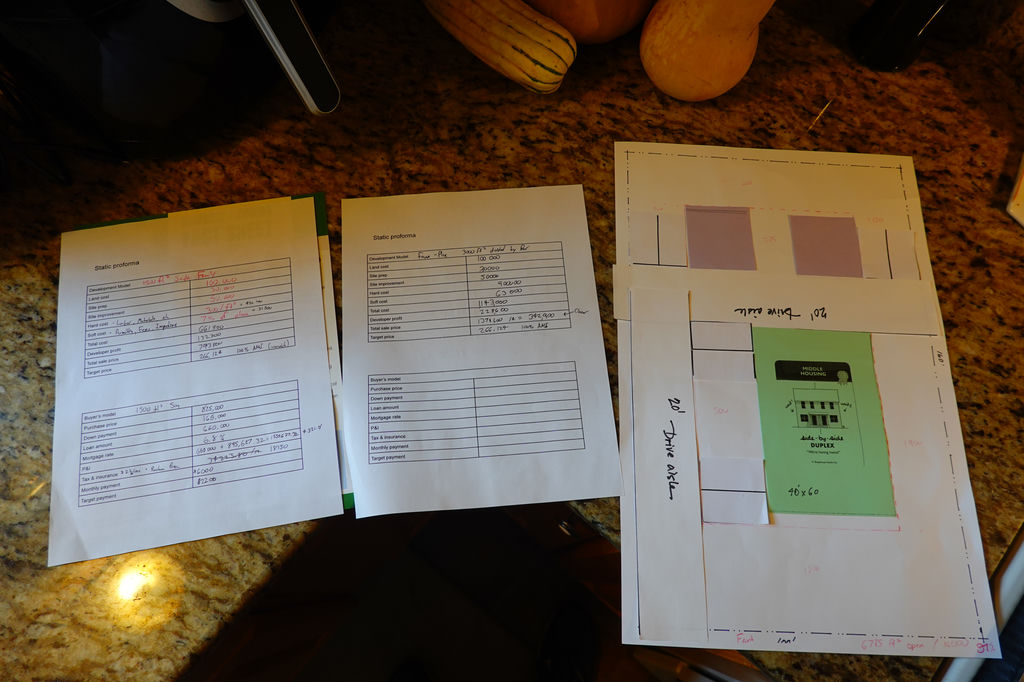
The next step was to evaluate some "quick fixes" that are sometimes touted as a means to close the gap. Sometimes towns will give away publicly owned land to the developer for free to build more affordable housing, this doesn't fix the problem. Even if on top of that the developer was a true non-profit, and all inspection and permitting fees were waived, the sale price would still be unaffordable. Finally inclusionary zoning was evalauted to see if it could help, but shifting the costs from a small percentage of the units to the other units makes those units even more unaffordable and unable to be sold at "market rate". If the development is large enough and the percentage small enough it could sometimes work though. I'm glad to see Richmond has repealed it's inclusionary zoning provisions. I was also glad to see that the workshop wasn't singling out and vilfying developers, towns, or any one part of the process, many things contribute to the problem, but material costs are a very large piece now.
The next part of the workshop was taking a small lot (especially in the context of Richmond) and trying to lay out a development on it. We used the zoning and planning rules of chosen town in New Hampshire for the required setbacks, buffers, parking, driveways, max lot coverage, etc. It was very difficult to make those requirements work, and nearly impoosible to put an affordable house on the lot. I ended up with a non-conforming plan which would need some variances to fit within the zone, and even then would be unaffordable. It did a good job of showcasing how certain requirements can be onerous or prevent reasonable development.
Finally we got into some ideas for how to fix this. The biggest one is adaptive reuse, which allows the conversion of an existing building into any amount of residential units or permitted uses. I'm happy to say that Richmond already has provisions for this, and is very close to that ideal. Reusing exisitng vacant buildings saves a lot on labor, materials, and site improvement. This has a realisitic chance of creating affordable housing. Some other ways to allow more development is to drop or ease certain requirements such as, parking minimums, setbacks, or lot coverage. Another help would be Form Based Code which simplifies the zoning requirements for developers.
While not all of these necessarily apply to Richmond or would be desirable, one thing that stands out is lot size requirements. Looking at the existing lots on Main St. of Richmond many of these would be too small to be permitted in this zone today. While I don't live on Main St. my house's lot wouldn't be permitted in its zone today either. Protecting our aquifier and environment remains very important, but certain areas such as Main St. near 95 would benefit from allowing more creative developments akin to a town center. If we want more communities like Shannock Village or Alton, they could not be created in nearly any zone of the town today.
In summary, I learned a good deal from this workshop, and I hope to utilize this knowledge so we can actually create a reasonable opportunity to develop affordable housing in Richmond.
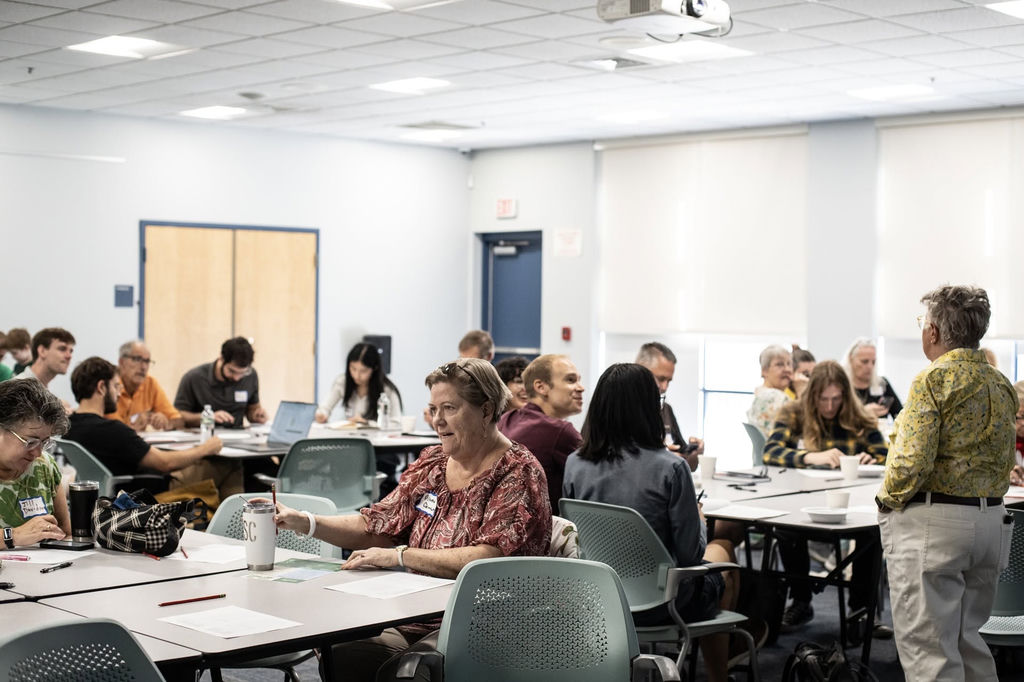
If you are interested in these topics Neighbors Welcome RI hosts more of these workshops and events, and publishes a newsletter with all of those details.